A lift may look simple from outside but one small fault inside can stop it from working. One of the main reasons for sudden lift stops is door lock failure. Many service calls happen because of this issue. If you know what to check first, you can save time and reduce risk.
This guide explains the most common elevator door lock problems and the parts you should check first. It is written in simple words so that technicians, building managers and buyers can understand it easily.
Common Signs of Elevator Door Lock Failures
Before going deep into parts, you need to know the signs. These signs help you find the problem early.
- The lift does not move even after doors are closed
- The door shows closed but the lift panel shows an error
- The lift stops between floors
- The door does not lock properly
- You hear unusual sounds near the door area
If you see these signs, you should inspect the door lock system without delay.
Main Causes of Elevator Door Lock Failures
1. Elevator Door Lock Contact Issues
Electrical contacts inside the lock send signals to the control system. If these contacts are dirty or not aligned, the signal may fail.
This is known as elevator door lock contact issues. Even a small misalignment can stop the lift from moving. You should check if the contacts are clean and properly touching.
Replacing damaged contact units like AZ 05 types can solve this issue quickly.
2. Landing Door Lock Failure
Each floor has its own landing door lock that holds the door closed when the lift is not at that level. If this lock fails, the lift system will not allow movement.
This problem is called landing door lock failure and it can happen due to worn parts or internal damage. A loose latch or delay in locking is a clear sign.
Using reliable parts like G509 landing door locks can improve performance and safety.
3. Elevator Triangle Lock Use and Handling
Triangle locks are used for manual door opening during maintenance or emergency. They should not be used for regular access.
Improper elevator triangle lock use can damage internal lock parts. It can also lead to misalignment which affects normal operation. Only trained staff should handle triangle locks, and any sign of looseness should be checked immediately.
4. Elevator COP and LOP Lock Problems
Control panels have lock systems to protect buttons and wiring. When these locks fail, it can lead to safety concerns and misuse.
These are known as elevator COP and LOP lock problems can damage internal lock parts. It can also lead to misalignment which affects normal operation. Only trained staff should handle triangle locks, and any sign of looseness should be checked immediately.
If the lock feels loose or stuck, it should be replaced with suitable parts like E 431 COP locks.
5. Elevator Door Lock Wheel and Device Issues
Door movement depends on wheels and lock devices. If these parts wear out, the door may not align correctly.
This results in elevator door lock wheel and device issues can damage internal lock parts. It can also lead to misalignment which affects normal operation. Only trained staff should handle triangle locks, and any sign of looseness should be checked immediately.
Checking and replacing worn parts such as DK RN4 lock devices can fix the issue and improve door function.
What Causes Elevator Door Lock Problems in Real Conditions
1. Dust and Dirt
Dust and dirt can settle on door lock contacts and moving parts over time. This reduces proper contact and affects signal flow to the control system. When dirt builds up, the lock may fail to engage even if the door is closed fully. Regular cleaning helps prevent this issue.
2. Heavy Usage
Lifts in busy buildings run many times in a day. This constant use puts stress on door locks and related parts. Over time parts like latches, wheels and contacts wear out faster. High usage without timely checks can lead to sudden failure.
3. Poor Maintenance
Skipping regular service checks allows small issues to grow into bigger problems. Loose parts, misalignment and worn contacts may go unnoticed. Without proper inspection, the door lock system may fail without warning.
4. Low Quality Parts
Using low quality spare parts can reduce the life of the door lock system. These parts may not fit properly or may wear out quickly. This can lead to repeated failures and higher repair costs. Choosing tested and reliable parts helps maintain smooth operation.
Step by Step Checklist to Inspect Door Lock Issues
When a lift shows door lock faults, it is important to follow a simple inspection process.
1. Check Door Alignment
Make sure the door closes fully without gap. Misalignment can stop the lock from engaging.
2. Inspect Lock Contacts
Check if the contacts are clean and touching properly. Look for dust or wear.
3. Test Landing Door Lock
Open and close the landing door and see if the lock holds firmly.
4. Check Lock Devices and Wheels
Inspect for wear or damage. Listen for sound during door movement.
5. Verify Panel Locks
Check COP and LOP locks to confirm they are working smoothly.
Following this checklist helps you find the issue faster and avoid guesswork.
Electrical vs Mechanical Door Lock Failures
Electrical Failures
These include contact issues, wiring faults or signal failure. The lift may show error even when the door looks closed.
Mechanical Failures
These include worn latches, misalignment and damaged lock devices. The door may not close or lock properly.
Both types need different checks and fixing methods, so it is important to identify the correct cause.
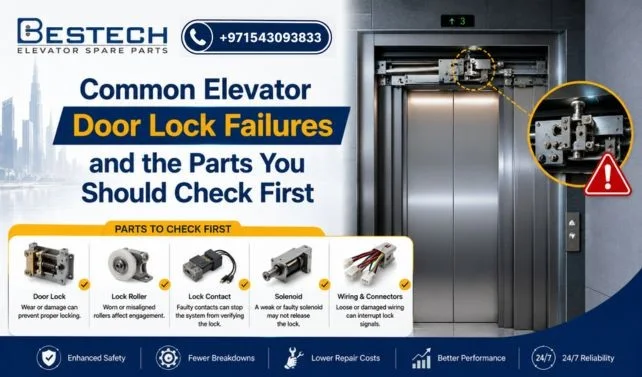
Parts You Should Check First
When facing door lock issues, start with these key parts
- Door lock contacts
- Landing door locks
- Lock devices and wheels
- Triangle lock system
- COP and LOP locks
Checking these parts first helps you find the issue faster and reduce repair time.
Where to Buy Elevator Spare Parts in Dubai?
After identifying elevator door lock contact issues, landing lock faults or worn lock devices, the next step is to choose the right elevator door system parts replacement.
Finding the right elevator spare parts in Dubai is important for safe and smooth lift operation. Using poor quality parts can lead to repeated failures and higher maintenance cost.
Choose suppliers who provide tested products and a wide range of door lock components such as contacts, landing locks, triangle locks and lock devices. Quick availability also helps reduce downtime during repairs.
Bestech offers a complete range of elevator door locks and related components that match different lift systems used in Dubai and nearby areas.
Conclusion
Door lock failures are common, but they can be managed with early inspection and using the right parts. From contact issues to landing lock faults, each component plays an important role in safe lift operation.
Understanding these issues and checking the right parts first helps reduce downtime and improve safety. Following elevator door locks safety essentials also supports reliable and consistent lift performance. Regular maintenance and quality spare parts further help in avoiding repeated failures.
FAQ
1. What are the most common elevator door lock failures?
Common failures include contact issues, worn landing locks and misaligned lock devices.
2. How do I fix elevator door lock contact issues?
You can clean and adjust the contacts but damaged parts should be replaced.
3. Why does my lift not move even when doors are closed?
This usually happens due to a door lock signal failure or misalignment.
4. When should I replace elevator door lock parts?
If parts show wear or repeated failure, it is better to replace them.