A lift rarely fails without warning. In most cases it shows small changes in performance before a major issue appears. Many building owners and facility managers ignore these early signals because the lift is still working. This delay leads to sudden breakdowns, higher repair cost and safety concerns for users.
Understanding how elevator systems work and how parts wear out can help you take action at the right time. You can plan elevator spare parts replacement early and keep the system running in a stable condition instead of waiting for failure. This guide explains what to check, what signs to watch and how to manage replacement before problems grow.
Why Elevator Spare Parts Wear Out Over Time
Every elevator system depends on a mix of mechanical and electrical components that work together during each trip. These parts slowly lose efficiency with repeated use.
1. Continuous usage and load pressure
In busy buildings lifts run throughout the day. Each movement adds stress on cables, brakes and door systems. Over time this constant pressure reduces strength and smooth performance.
2. Environmental impact on components
Dust, heat and moisture can affect both electrical and mechanical parts. These conditions can speed up wear and reduce part life when machine rooms are not clean or well-maintained.
3. Lack of routine maintenance
Small issues remain unnoticed without regular in bspection. A minor problem such as slight misalignment or slow response can grow into a major fault if it is not corrected early.
This is why planned maintenance is important to keep all parts working properly.
Early Warning Signs of Worn Elevator Parts
Identifying worn elevator parts signs is the first step in preventing failure. These signs are usually easy to notice during daily use.
1. Door movement problems
It may indicate worn rollers or alignment issues. This is one of the most common early signs if the doors open slowly or do not close fully.
2. Unusual noise during operation
Grinding, clicking or rubbing sounds show that internal components are not working smoothly. These sounds should never be ignored.
3. Delay in system response
It may point to control system or wiring issues when there is a delay after pressing buttons. This affects user experience and indicates deeper problems.
4. Jerky or uneven ride
A smooth ride indicates a system that works properly. It means mechanical parts may be worn if the lift shakes or stops suddenly.
5. Incorrect floor leveling
If the lift stops slightly above or below the floor level, it creates risk for users and shows that calibration or braking needs attention.
Identifying these signs early helps you act before the issue becomes serious.
Common Elevator Spare Parts That Fail Frequently
Knowing common elevator spare parts issues allows you to focus on the areas that need regular monitoring.
1. Door system components
Door rollers, locks and sensors wear out quickly due to constant opening and closing. Even a small issue in this system can stop the lift.
2. Brake system wear
Brakes are responsible for safe stopping. Over time they lose grip which affects stopping accuracy and safety.
3. Cable and pulley wear
Cables carry the load of the lift. Continuous movement causes gradual wear and loss of tension. Pulleys may also create noise when worn.
4. Control panel and sensor faults
Electrical components manage the entire system. Faults in control panels or sensors can lead to delayed response or unexpected stops.
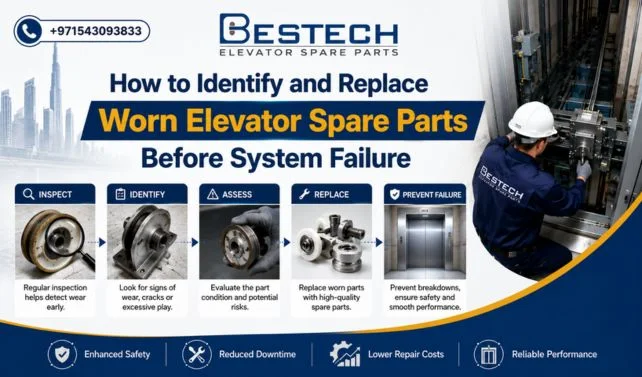
Step-by-Step Process to Inspect Elevator Components
A clear inspection process helps you understand how to maintain elevator components and makes sure no part is missed.
Step 1: Inspect door operation
Observe how the doors open and close. Check for smooth movement, proper alignment and any unusual sound. Doors are used in every cycle so they require close attention.
Step 2: Check mechanical components
Inspect cables, pulleys and braking systems. Look for visible wear and listen for abnormal noise. Mechanical parts must operate smoothly to give safe movement.
Step 3: Test control system
Press multiple floor buttons and observe the response time. Check if commands are executed correctly without delay.
Step 4: Review safety systems
Test sensors, emergency alarms and backup systems. Safety features must work properly at all times.
Step 5: Maintain inspection records
Keep a log of all checks and observations. This helps track patterns and plan future maintenance effectively.
When to Replace Elevator Spare Parts Before Failure
You should always replace elevator parts before failure instead of waiting for complete breakdown.
1. Drop in performance
It indicates that parts are wearing out if the lift becomes slow or less responsive.
2. Increase in noise
New or louder sounds suggest internal damage or friction.
3. Safety concerns
Immediate replacement is required if safety systems fail or show irregular behaviour.
4. End of service life
Every part has a defined lifespan. Replacing parts at the right time makes sure consistent performance.
Planned replacement of elevator spare parts in Dubai helps avoid emergency repairs and improves reliability.
Key Elevator Components That Need Regular Replacement
1. Door system components
The door system is one of the most active parts of the lift. Delay in elevator door system parts replacement can lead to complete system stoppage.
Components include door rollers, locks, sensors and tracks. Regular checks guarantee smooth operation and prevent sudden failure.
2. Electrical components
Proper elevator electrical components maintenance is important for stable system control.
This includes control panels, wiring systems, safety circuits and power units. Electrical issues may cause sudden stops or incorrect operation.
3. Mechanical components
Mechanical parts support movement and load handling.
These include cables, brakes and pulleys. Any wear in these parts affects safety and ride comfort.
Elevator Preventive Maintenance Tips for Long-Term Performance
Following elevator preventive maintenance tips can reduce breakdown risk and extend system life.
1. Schedule regular inspections
Set a fixed plan based on lift usage. High-usage systems need more frequent checks.
2. Keep equipment areas clean
Dust and dirt can affect sensors and electrical systems. Clean surroundings improve performance.
3. Avoid excess load
Overloading increases pressure on cables and mechanical parts which speeds up wear.
4. Use trained service professionals
Proper inspection and service guarantee that issues are identified and fixed correctly.
Basic Elevator Maintenance Checklist for Routine Service
A proper elevator maintenance checklist makes sure that all important areas are covered during inspection.
- Check door operation and alignment
- Inspect cables, brakes and pulleys
- Test control system response
- Verify safety systems
- Listen for unusual sounds
- Check floor leveling accuracy
Consistent checks help maintain system health and prevent unexpected issues.
Conclusion
Elevator systems always provide early signals before failure. The secret is to identify these shifts and act appropriately. Regular inspection, proper planning and use of quality parts help maintain good operation and safety. Taking a tiny action early can help avoid bigger issues later.
FAQ
1. How can I identify worn elevator parts?
Look for slow doors, unusual noise, uneven movement and delayed response.
2. How frequently should elevators be inspected
It depends on usage but regular scheduled checks are necessary.
3. Which elevator parts wear out faster?
Door system components wear out faster due to frequent use.
4. Is it safe to delay replacement?
No. Delaying replacement can lead to sudden failure and higher cost.
5. Why is preventive maintenance important?
It helps detect problems early and provides safe operation.