Most elevator users focus on how smooth the ride feels, but many issues actually start with the doors. Slow opening doors, unusual noises or repeated door faults may seem minor at first, yet they can indicate underlying issues within the door drive system.
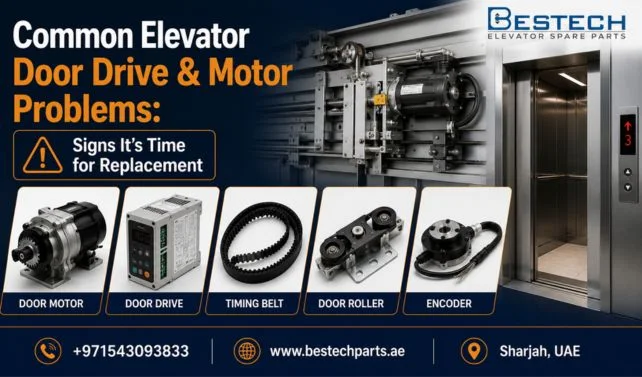
In this blog, you will gain a clear understanding of common elevator door drive and motor problems, the warning signs to watch for and when it may be time to consider an elevator door drive replacement UAE.
What Is an Elevator Door Drive and Motor?
Elevator doors open and close automatically through a combination of mechanical and electrical components working together.
The door drive is responsible for controlling the movement of the elevator doors. The motor provides the power needed to move the doors while the controller manages speed, timing and positioning.
Although these components work together, they perform different functions:
- Door drive controls door movement
- Door motor provides mechanical power
- Controller manages operation and communication
When one of these components begins to fail, the entire door system can be affected.
How Elevator Door Systems Work?
Modern elevator doors depend on multiple components operating together accurately and consistently.
1. Door Drive Controller
The lift door drive controller controls how the doors open and close. It manages the speed, timing and movement to keep everything running smoothly. This helps the doors work safely and reduces wear on other parts.
2. Door Motor
The motor powers the opening and closing of the elevator doors during each operating cycle.
If the motor becomes less efficient or starts to wear out, working with a reliable elevator door motor supplier in Dubai can help maintenance teams find the right replacement to keep the system running smoothly.
3. Sensors
Modern elevators use elevator door sensors and controllers to detect if a person or object is in the doorway. These sensors send signals to the controller, which then stops or reopens the doors to prevent accidents.
4. Door Locks
Door locks keep elevator doors closed while the lift is moving. They work with the door controller to make sure the doors stay aligned and do not open at the wrong time.
If door locks wear out or stop working properly, they can cause safety issues, door errors, service interruptions and more frequent maintenance.
5. Door Rollers / Sliders
These help the elevator doors move smoothly along their tracks every time they open and close.
With continued use, these components may deteriorate, leading to irregular door movement, increased noise or reduced efficiency, ultimately affecting the overall performance of the elevator door system.
Common Elevator Door Drive & Motor Problems
Door systems complete thousands of operating cycles every month. Over time, wear and ageing can affect performance.
1. Doors Opening Slowly
One of the first signs of a problem is when the elevator doors start opening more slowly than usual. This can happen due to wear in the motor, issues with the controller or parts inside the door system not moving smoothly.
2. Doors Not Closing Completely
Incomplete door closure means the doors do not shut fully or properly, which can stop the elevator from moving and cause frequent service interruptions.
This issue is often caused by faulty sensors, control system errors or worn-out parts like rollers and tracks that prevent smooth door movement.
3. Sudden Door Reversal
When elevator doors start to close but suddenly open again, it usually means the system is detecting something in the way or there is a problem with the sensors, controller or door alignment.
4. Excessive Noise During Operation
Grinding, squeaking or any unusual noise when the elevator doors open or close usually means that some parts are worn out. This could be due to damaged rollers, misaligned tracks or issues with the motor.
If these noises are ignored, the problem can get worse over time and may lead to bigger faults in the door system.
5. Motor Overheating
Frequent use of the elevator can put extra strain on older door motors. If the motor becomes unusually hot during operation, it may be a sign of wear, electrical problems or parts inside the system not moving smoothly.
Warning Signs That Replacement Is Needed
Not every problem requires immediate replacement. However, some indicators suggest that replacement may be more practical than repeated repairs.
- Frequent service calls for the same problem are a clear sign that the parts are worn out and no longer functioning efficiently.
- Error messages or warning codes that keep appearing even after repairs indicate that underlying faults have not been fully resolved and require deeper inspection.
- When repair costs continue to increase and the same issues occur repeatedly, replacing the door drive system may offer better long-term value than ongoing repairs.
- Unstable or inconsistent door movement, such as jerky motion or uneven opening and closing, is a clear warning sign of failing components.
Components Often Replaced Along With Door Drives
When replacing a door drive system, several related components are frequently evaluated at the same time.
1. Door Locks
Replacing worn door locks helps ensure the elevator doors close and stay secured properly, which improves safety and keeps the system running smoothly.
2. Door Wheels and Rollers
These parts are used every time the elevator doors open and close, so they naturally wear out over time. If they are not maintained or replaced when needed, they can cause noise, vibration and uneven door movement.
3. Door Sliders
Sliders help the doors move smoothly along their track. When they wear out, doors may become noisy or misaligned, so they are often replaced to restore proper movement and performance.
4. Sensors
Modern sensors help the doors open and close correctly by detecting passengers and obstacles, making the elevator safer and more reliable to use.
5. PCB Boards
Door systems use PCB boards to control how different parts communicate and function together. When these boards become old or damaged, they can cause issues like delayed responses, inconsistent door movement or system errors.
Additional information about elevator door spare parts can help maintenance teams understand which components require regular evaluation.
How Modern Door Drives Improve Elevator Performance?
Modern door drive technology offers several advantages compared to ageing systems.
- Smoother Operation: Improved control systems help create more consistent door movement and a better passenger experience.
- Reduced Component Wear: Modern drives help minimise unnecessary stress on motors and mechanical components.
- Better Passenger Safety: Advanced control systems work closely with sensors to support safer operation.
- Lower Maintenance Costs: Reliable modern systems can help reduce the frequency of maintenance interventions and unexpected repairs.
For many ageing elevators, an elevator door operator system replacement can significantly improve overall performance.
Choosing the Right Door Drive and Motor for Your Elevator
Selecting suitable replacement components requires careful evaluation.
1. Compatibility Matters
Replacement components should match the specifications of the existing elevator system to ensure proper compatibility, safe operation and smooth integration with existing components.
2. Voltage Requirements
Electrical requirements must be verified before installation to ensure compatibility with the existing system. This helps avoid potential damage to components and supports safe, reliable elevator operation.
3. Brand Matching
Matching components with existing equipment helps ensure proper communication between systems, reduces compatibility issues and allows maintenance teams to work more efficiently with familiar components.
OEM vs Replacement Parts
| Feature | OEM Parts | Replacement Parts |
|---|---|---|
| Definition | Manufactured by the original equipment manufacturer | Produced by third-party manufacturers |
| Compatibility | Designed specifically for the original system | May vary depending on manufacturer and specifications |
| Quality | Typically consistent with original system standards | Quality can vary based on supplier |
| Cost | Usually higher due to brand and certification | Often more cost-effective |
| Availability | May be limited for older systems | Generally more widely available |
| Installation | Easier integration with existing systems | May require compatibility checks |
| Warranty | Often includes manufacturer warranty | Warranty depends on supplier |
Building owners considering elevator door motor repair UAE projects should also evaluate whether replacement offers greater long-term value than continued repairs. For additional guidance, maintenance professionals can refer to this detailed guide on elevator door selection.
Final Thoughts
Elevator door systems perform thousands of operating cycles throughout their service life. Over time, motors, controllers, sensors and mechanical components naturally experience wear.
Recognising early warning signs such as slow operation, excessive noise, frequent faults and rising maintenance costs can help building owners make informed replacement decisions before larger problems occur. Working with reliable elevator spare parts suppliers in UAE can also ensure access to quality components that support long-term elevator performance and safety.
FAQ
1. What causes elevator doors to open slowly?
Slow door movement may be caused by motor wear, controller faults, worn rollers or mechanical resistance within the door system.
2. Can sensors affect elevator door performance?
Yes. Faulty sensors can cause door reversals, incomplete closure and operational interruptions.
3. How often should elevator door systems be inspected?
Regular inspections should be carried out as part of routine maintenance schedules, typically every few months, to identify wear, alignment issues and potential faults early.
4. What is the benefit of replacing an old door drive system?
Modern door drives can improve reliability, reduce maintenance requirements and support smoother operation.
5. How can I choose the correct replacement door drive?
Compatibility, voltage requirements, brand specifications and system design should all be evaluated before selecting replacement components.