An elevator ride lasts only a few seconds but the door system that ensures the ride is safe operates continuously. Every time the door opens and closes, it must protect people and support the full operation of the lift system. If the door system fails, it can stop the lift service and create safety risks inside the building.
For engineers, builders and procurement teams the door system is not just a metal panel that slides open. It is a safety system that includes locks, sensors, drives and wheels that move with perfect timing. A clear elevator door selection guide helps project teams choose the correct system that meets building codes and safety rules.
This article explains elevator door types safety devices, compliance basics and how to select the right door system for different buildings. It also explains how certified parts from an experienced elevator spare parts supplier such as Bestech Elevator Spare Parts support reliable operation.
Types of Elevator Doors Used in Modern Buildings
Different buildings require different door systems. The size of the shaft building traffic and design style decide which system is used. Understanding elevator door types helps project teams select the right configuration.
1. Center Opening Elevator Doors
Center opening doors move from the middle to both sides. These doors allow faster passenger movement and smooth access.
2. Telescopic Elevator Doors
Telescopic doors move in one direction where several panels slide behind each other. These doors are used where shaft space is limited.
Commercial buildings and retrofit lift projects commonly use this door system.
3. Glass Elevator Doors
Glass doors are used in hotels, shopping malls and modern office buildings where design visibility is important.
They require strict elevator door safety standards because glass panels must resist impact and maintain correct locking systems.
Elevator Door Mechanism Comparison
| Door Type | Application | Advantages | Safety rating |
|---|---|---|---|
| Center Opening Door | Residential towers and Hospitals | Fast passenger movement and wide | High safety when paired with |
| Telescopic Door | Commercial buildings | Saves shaft space and smooth operation | High with interlock systems |
| Glass Door | Hotels, Malls and Offices | Modern design and clear visibility | High with certified safety locks |
The mechanism selection should always follow the elevator door selection guide used by engineers during lift design planning.
Fire Rated Elevator Door Requirements
In many buildings elevator doors must act as fire barriers. A fire rated elevator door prevents fire and smoke from spreading through the shaft.
Fire rated doors must meet local and international fire safety standards. These doors use special steel construction and insulation layers that resist heat.
In the UAE, many projects follow international codes such as EN81 and ASME guidelines. The door assembly including locks frames and panels must pass certified fire resistance tests.
Builders must check lift door compliance requirements to confirm the door system meets fire protection rules before installation.
Elevator Safety Devices Used in Door Systems
Door safety devices protect passengers from accidents. They stop the door if something blocks the path and ensure the lift moves only when the door is fully locked.
Several important safety devices work inside modern door systems.
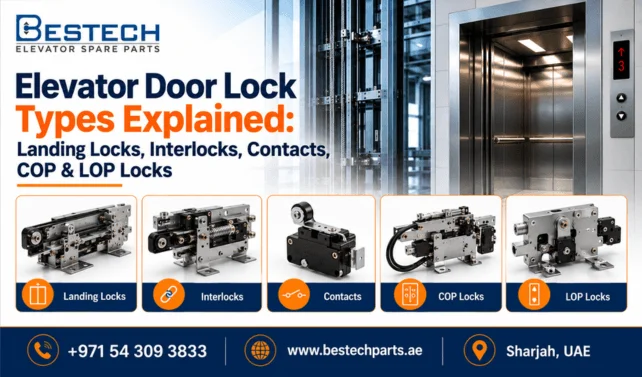
1. Landing Door Locks
Landing door locks keep the door closed when the lift is not present at the floor. This prevents people from opening the door when the cabin is not there.
The elevator landing door lock MKG-161-06 is a certified locking device used in many elevator systems.
It also lock system to support the lift door compliance requirements and keeps passengers safe by allowing door opening only when the lift cabin arrives.
2. Door Hanging Wheels
Door panels slide along tracks using hanging wheels. These wheels carry the full weight of the door panels and allow smooth movement.
The elevator door hanging wheel 74-18-6203 helps door panels move smoothly with reduced vibration. A stable wheel system improves door life and supports reliable daily operation.
3. Light Curtain Door Sensors
A sensor system protects passengers while the door closes. It creates an invisible light barrier across the doorway.
The elevator light curtain door sensor (center open) stops the door when a person or object blocks the entrance.
These sensors are required for modern elevator door safety standards because they reduce the risk of door accidents.
4. Door Drive Systems
The door drive controls the opening and closing movement of the elevator door.
The elevator door drive BS-DD0001 provides stable control and smooth door movement. A reliable drive system helps maintain correct timing between the lift cabin and landing door system.
EN81 and ASME Elevator Compliance Basics
Two main standards guide elevator design and safety.
EN81 Standard:
Used widely in Europe and many Middle East projects including the UAE. This standard defines requirements for door locking systems sensors and structural safety.
ASME A17.1 Code:
Used in North America and many international projects. It explains safety rules for elevator doors locks and operational protection systems.
Both standards require door interlocks safety sensors and reliable mechanical parts to maintain passenger protection.
Builders must check lift door compliance requirements before installation to confirm that all parts meet these standards.
Choosing Elevator Doors Based on Building Type
Different buildings require different door solutions. The building size, passenger traffic and design style guide the selection process.
1. Residential Buildings
Residential towers require quiet and reliable doors. Center opening doors with light curtain sensors work well because they support smooth passenger flow.
2. Hospitals
Hospitals require wide door openings for stretchers and equipment. Center opening doors with high sensitivity sensors improve safety for patients and staff.
3. Commercial Offices
Office buildings require doors that support high traffic during peak hours. Telescopic doors with reliable drive systems help manage passenger flow.
4. Hotels and Shopping Centers
Hotels and malls sometimes use glass doors for visual appeal. These doors must follow strict elevator door safety standards and include certified locking systems.
Using a proper elevator door selection guide helps engineers choose the correct door system for each building type.
Elevator Door Compliance in UAE Buildings
The UAE construction sector follows strict safety regulations and the elevator systems must comply with international codes and local authority approvals.
Engineers must confirm that door locks sensors and drives meet safety standards before project approval. Procurement teams also check if parts are supplied by certified manufacturers.
Working with a reliable elevator spare parts supplier like Bestech Elevator Spare Parts helps ensure all door components meet safety and compliance rules.
Their product range includes locks, wheels, sensors and drives used in many lift systems across commercial and residential buildings.
Conclusion
Elevator doors play a key role in lift safety and building operation. The door system includes mechanical parts, electronic sensors and locking devices that must work together every day.
A clear elevator door selection guide helps engineers, builders and procurement teams choose the right door system for each building project.
Project teams can create safe and reliable elevator systems by understanding elevator door types, following elevator door safety standards and meeting lift door compliance requirements.
Using certified parts such as landing door locks, door wheels sensors and drive systems from a trusted elevator spare parts supplier also supports long term performance and building safety.
FAQ
1. What are the main elevator door types used in buildings?
The main elevator door types include center opening doors, telescopic doors and glass doors. The selection depends on shaft space building traffic and design needs.
2. Why are elevator door safety standards important?
Elevator door safety standards protect passengers by ensuring doors lock correctly detect obstacles and stop operation if a fault occurs.
3. What is a fire rated elevator door?
A fire rated elevator door resists heat and smoke during a fire. It helps prevent fire spread through the elevator shaft.
4. What does lift door compliance mean?
Lift door compliance requirements confirm that elevator doors follow safety codes such as EN81 or ASME standards before installation.
5. How do sensors improve elevator door safety?
Sensors like the elevator light curtain door sensor (center open) create a protective light barrier across the doorway. The system stops closing to prevent injury if someone blocks the door.