Choosing a replacement part for a lift involves more than finding a component that looks similar to the original. Differences in electrical ratings, dimensions, connector arrangements or mounting details can make a visually similar part unsuitable for the existing installation. Using the wrong component can result in installation problems, repeated faults and avoidable maintenance costs.
Selecting compatible elevator spare parts therefore starts with checking the component already installed in the lift. The part number, technical specifications, control system, connections and physical arrangement should all be considered before an order is placed.
Whether you are a building owner, maintenance company or lift service professional, having these details available before contacting a supplier can make part identification and compatibility checks more straightforward.
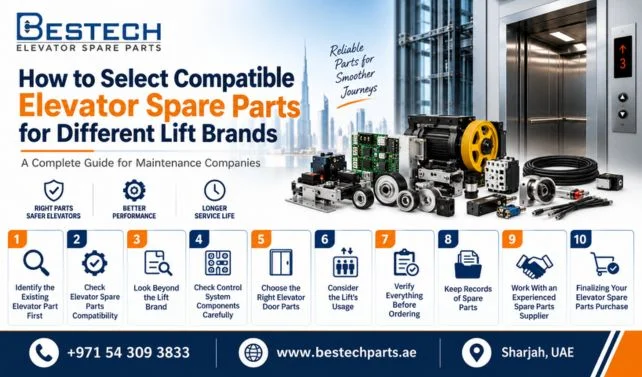
Identify the Existing Elevator Part First
Start with the component that is currently installed in the lift. Check the label for the part number, model number, reference number, voltage rating and any other identification details. If the information is difficult to read, take clear photographs before the component is removed. Try to capture the complete label, connectors, terminals, mounting points and any visible markings.
The lift model and system type can provide additional information, but they should be checked alongside the details of the existing component. For older equipment, maintenance records and previous service reports may also help identify what has been installed during earlier repairs or upgrades. This can be particularly useful when the current component is different from the one originally supplied with the lift.
Check Elevator Spare Parts Compatibility
A replacement component needs to match more than the physical space where it will be installed. A part may have similar dimensions but still be unsuitable because its electrical rating, connector arrangement, mounting configuration or operating requirements are different.
Good elevator spare parts compatibility depends on comparing the proposed replacement with the component currently installed and, where necessary, the wider lift system. The information printed on the existing component is a useful starting point, but it should be checked against the technical requirements before the replacement is ordered.
Before ordering, check:
- Part number or reference number
- Dimensions and mounting points
- Voltage and electrical rating
- Connector and wiring arrangement
- Operating specifications
- Communication requirements
- Control system requirements
If an important specification cannot be confirmed, do not rely on appearance alone. Ask a qualified technician or experienced supplier to verify the replacement against the available component and system information.
Look Beyond the Lift Brand
When sourcing lift spare parts for different brands, the lift brand can help narrow down the equipment, but it should not be the only information used to identify a replacement.
A lift may have been operating for many years and could have had components repaired, replaced or upgraded during that time. The part currently installed may therefore be different from the component used when the lift was originally commissioned. Relying only on the original lift information can lead to an incorrect match.
For this reason, provide the supplier with the details of the component currently fitted whenever possible. The part number, clear photographs, dimensions and technical specifications can provide a more reliable basis for checking a replacement than the lift brand alone.
Check Control System Components Carefully
Electronic components need particular attention because they interact with other parts of the lift control system. Controllers, sensors, inverters, buttons and related components may have specific voltage, connection, signal or communication requirements. Two components can look similar and still have different interfaces or operating requirements.
When sourcing elevator control system spare parts, compare the identification details and technical specifications of the existing component with the proposed replacement before ordering.
Clear photographs of the component label, connectors and connections can help with identification. Electrical panels, wiring and control equipment should only be inspected or handled by appropriately qualified professionals.
Choose the Right Elevator Door Parts
The elevator door system contains several components that work together during opening, closing and locking. Door locks, rollers, switches and other parts therefore need to match the existing door mechanism rather than simply fitting into the available space.
When sourcing elevator door spare parts in UAE, provide the supplier with the existing part number, dimensions and clear photographs of the component and its mounting arrangement where available.
If the same door component keeps failing, replacing it again may not solve the underlying problem. Wear, alignment, installation conditions or another part of the door mechanism may be contributing to the failure. The cause should be investigated before repeatedly replacing the same component.
Consider the Lift's Usage
The operating environment can provide useful context when discussing a replacement component. A lift in a residential building may have a different operating pattern from one serving an office, hotel, shopping centre or industrial facility. Daily trips, operating hours and typical load levels can vary considerably.
When discussing elevator replacement parts, provide the supplier with relevant information about how the lift is being used. This information does not replace the technical compatibility check, but it can give the supplier additional context when reviewing the required component.
Repeated failures should also be mentioned. If the same component has already been replaced several times, the maintenance team may need to investigate the wider system instead of treating every replacement as an isolated failure.
Verify Everything Before Ordering
A final check before placing the order can help prevent an incorrect component from reaching the installation site.
Check the:
- Exact component required
- Part number or reference number
- Dimensions and mounting details
- Electrical specifications
- Connector and wiring details
- Compatibility with the existing system
- Quantity required
- Stock availability
- Expected delivery time
If the original component is discontinued, ask whether a suitable alternative is available and what information has been used to confirm the replacement. Do not assume that a newer or visually similar component will work simply because it performs a similar function.
Where important information is missing, send clear photographs and all available component details to the supplier. This gives them a better basis for checking the replacement before the order is confirmed.
Keep Records of Spare Parts
After a replacement has been installed, keep the component details with the lift's maintenance records. Record the part number, photographs, supplier information and purchase details so that the same information is available during the next service or breakdown.
Where possible, also record the date of replacement and any relevant information provided by the technician. This can help the maintenance team understand which components are currently installed rather than relying only on older equipment records.
For buildings with several lifts, maintain separate records for each system. Similar-looking components can create confusion when a replacement is needed urgently, so having previous part information readily available can make future identification much easier.
Work With an Experienced Spare Parts Supplier
A supplier can be particularly helpful when a component is difficult to identify, discontinued or available in several versions. When contacting an elevator spare parts supplier in UAE, provide the lift details together with the part number, component photographs, dimensions and any technical information available.
An experienced supplier can review these details and help determine which replacement options may be suitable. This is especially useful for older equipment, where the original component may no longer be readily available or where previous repairs have changed the parts installed in the system.
Before confirming an order, ask for the proposed part number and relevant specifications to be checked against the information supplied. Clear communication at this stage can reduce the risk of ordering an incorrect component and help avoid unnecessary installation delays.
Finalizing Your Elevator Spare Parts Purchase
Selecting compatible elevator spare parts should not be based on price, appearance or the lift brand alone. The replacement should be checked against the technical requirements of the existing component and the system in which it will operate.
Before placing the order, review the part number, dimensions, electrical specifications, connections and other available information. If something cannot be confirmed, ask the supplier or a qualified technician to check it rather than making an assumption.
For businesses in the UAE, working with a supplier that can assist with component identification, compatibility checks and availability can simplify the sourcing process, particularly when dealing with older, discontinued or urgently required parts.
FAQ
1. How do I check if an elevator spare part is compatible?
Start with the existing component's part number, model or reference number. Then compare its dimensions, mounting arrangement, electrical specifications, connectors and system requirements with the proposed replacement. If any important detail is unclear, have the replacement checked by a qualified technician or experienced supplier.
2. Can I identify an elevator spare part from a photograph?
A clear photograph can help with identification, especially when it shows the complete component label, part number, connectors and mounting points. However, a photograph alone may not confirm compatibility. Dimensions, electrical specifications and system information may also be required.
3. Is the lift brand enough to identify a spare part?
No. The lift brand is useful for narrowing down the equipment, but it does not always identify the exact component currently installed. Older lifts may have had repairs, upgrades or replacement components fitted over time, so the existing part number and technical details should also be checked.
4. What information should I send to a spare parts supplier?
Provide the lift model or system details where available, the existing component's part number, clear photographs, dimensions and relevant technical specifications. If the part has failed repeatedly, mention that as well so the supplier and maintenance team have the full context.
5. What should I do if the original elevator part is discontinued?
Do not select a replacement solely because it looks similar or performs a similar function. Ask the supplier or qualified technician to compare the available alternative with the existing component and system requirements before ordering.