An elevator may look simple from the outside but several safety components work together continuously to keep it running smoothly. Among them the brake system plays one of the most important roles in passenger safety and stopping accuracy. Without proper brake control elevators may develop issues like jerking, delayed stopping, vibration or unstable movement during operation.
At Bestech, we support lift companies across the UAE with quality elevator parts, technical support and reliable elevator brake spare parts in Dubai for different elevator systems and maintenance needs. In this blog we explain how elevator brake systems work, common warning signs to watch for and when important brake components should be replaced.
Key Components in an Elevator Brake System
An elevator brake system contains several connected parts that help control safe stopping, smooth movement and passenger safety during daily operation. Choosing reliable elevator brake system components in UAE is important for maintaining stable lift performance and reducing unexpected breakdowns.
When one brake component starts wearing out, it can slowly affect the overall elevator system and create safety risks if not checked early.
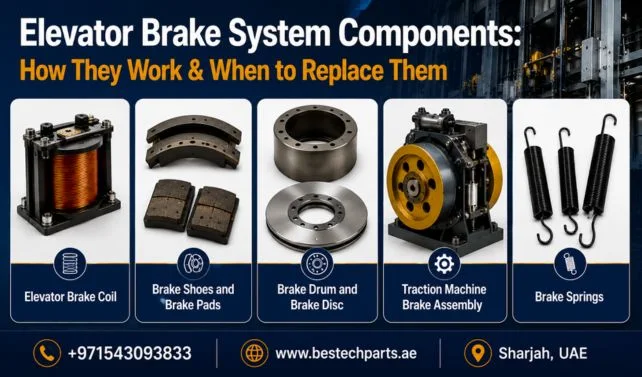
1. Elevator Brake Coil
The brake coil creates the magnetic force needed to release the brake when the elevator starts moving. Once power is removed, the brake closes again to hold the lift safely in position.
Common brake coil problems include overheating, delayed brake release, burning smell and sudden stopping issues. In many cases, poor wiring or heat buildup can damage the coil over time. This is why many lift companies look for elevator brake coil replacement in Dubai before the issue affects the full system.
2. Brake Shoes and Brake Pads
Brake shoes and brake pads help slow down and stop the elevator safely. These parts create friction against the brake drum or brake disc during operation.
Over time the surface starts wearing down because of daily elevator usage. Signs like grinding noise, slipping vibration and uneven stopping usually indicate replacement is needed. Working with a trusted lift brake shoe supplier in UAE helps maintain proper braking performance and passenger safety.
3. Brake Drum and Brake Disc
The brake drum or brake disc works together with the brake shoes to stop elevator movement smoothly. If the drum surface becomes uneven, it can create vibration and stopping problems.
Common issues include cracks, heat marks, alignment problems and surface wear. Regular inspection helps reduce damage to nearby brake parts and improves stopping accuracy.
4. Traction Machine Brake Assembly
The traction machine brake assembly connects the motor and braking system together. It controls movement stability and stopping precision, especially in high rise buildings with heavy elevator usage.
Routine inspection, cleaning and brake alignment checking help improve system life. Many maintenance teams source reliable elevator traction brake parts in UAE for long term lift operation.
5. Brake Springs
Brake springs help maintain brake tension and support proper stopping control. Weak springs can reduce braking accuracy and create leveling problems.
Symptoms of worn brake springs include vibration, delayed stopping, inconsistent brake pressure and elevator shaking during operation.
How They Work
Modern elevator brake systems use both mechanical and electrical systems together for safe operation. Every component works together with the control system to maintain smooth acceleration, controlled stopping and passenger safety.
1. Elevator Encoders and Brake Synchronization
Encoders monitor elevator speed and position during travel. This information helps the brake system respond correctly for accurate floor leveling and smooth stopping.
Faulty encoders may cause sudden jerking, delayed stopping, inconsistent speed and misleveling problems. As an elevator encoder supplier in UAE, we support lift companies looking for reliable elevator control solutions.
You can also read our guide on control system components for elevators to understand how sensors, controllers and monitoring systems support smooth elevator operation.
2. Electromagnetic Brake System
Most modern elevators use electromagnetic brakes. When electrical power is supplied, the brake releases and allows elevator movement. During power failure the brake automatically closes and holds the lift safely in place.
Common electrical brake faults include weak magnetic pull, wiring damage, brake timing problems and overheating. Regular elevator braking system maintenance helps reduce unexpected failures.
3. Emergency Braking and Safety Systems
Emergency braking systems protect passengers during overspeed conditions or sudden electrical failure. These systems work with safety governors to stop unsafe elevator movement.
Regular testing and inspection help buildings meet UAE safety expectations and improve passenger confidence during daily operation.
4. Elevator Inverters and Braking Control
Inverters help regulate motor speed during elevator movement and braking. They improve acceleration and deceleration control while also helping reduce energy usage.
When inverter issues happen, elevators may experience rough stopping, vibration, overheating and brake timing errors. Working with a trusted elevator inverter supplier in UAE helps improve braking stability and ride comfort.
For added electrical protection, many systems also depend on elevator circuit breakers to support safe operation.
When to Replace Them
Elevator brake parts slowly wear down through continuous operation. Identifying early warning signs helps building owners reduce sudden shutdowns and expensive repair work.
Common Signs:
- Burning smell near the traction machine
- Elevator jerking during travel
- Delayed stopping
- Unusual grinding or squealing noise
- Brake overheating
- Vibration during operation
- Rough floor levelling
- Inconsistent stopping accuracy
Ignoring these warning signs may affect passenger safety and create larger system damage over time.
Many building owners today look for trusted elevator brake system components in UAE to improve daily lift safety and reduce unexpected downtime.
Conclusion
A small brake issue today can turn into a major elevator problem later if it is ignored for too long. Signs like jerking, delayed stopping, unusual noise or brake overheating should never be taken lightly because every brake component works together to keep passengers safe during daily operation.
Regular inspection and timely part replacement help lifts run smoothly and reduce unexpected downtime in residential, commercial and high rise buildings. Choosing quality brake components and proper maintenance support can make a major difference in long term elevator safety performance and ride comfort.
FAQ
1. What happens if elevator brake parts are not replaced on time?
Worn brake parts can cause rough stopping, vibration, unusual noise and reduced elevator safety during daily use.
2. Why does an elevator jerk while stopping?
Jerking may happen because of worn brake parts, speed control issues or poor brake adjustment.
3. Is a burning smell from the elevator dangerous?
Yes. A burning smell may indicate brake overheating or electrical issues that should be checked immediately.
4. How can regular maintenance help elevator performance?
Regular maintenance helps lifts run smoothly, reduces sudden breakdowns and improves passenger safety.
5. Why do elevators make unusual sounds during operation?
Noise can happen because of worn brake shoes, loose parts or damaged braking components inside the system.