When an elevator stops without warning it can cause stress for both users and building managers. One minute it works fine and the next minute it refuses to move. If you are facing an issue it is not always a major failure. In many cases, the problem starts with small electrical parts that are easy to check and replace.
This blog explains the key electrical parts that you should inspect first. The aim is to help you understand what may be wrong and what steps you can take before calling for full repair service.
why elevator is not working and how to fix it
There are many reasons why a lift may stop. Power supply issues, control faults or sensor errors can all lead to failure. The first step is to stay calm and check basic components. Most elevator systems depend on a few main electrical parts that work together. If one part fails, the entire system may stop.
A proper check should start from the power source and then move to control parts. This simple method helps reduce time and avoids wrong diagnosis.
Reasons Why Elevator Stops Working
1. Contactor Failure in Elevator Systems
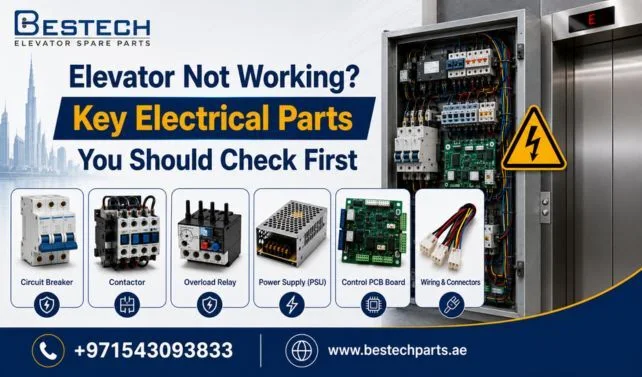
One of the main reasons that your elevator not working is due to contactor failure. The contactor controls power flow to the motor. If it fails, the motor will not run even when power is present. You may hear a clicking sound or see burn marks inside the panel. Replacing the contactor with a good quality unit is the best fix. Buy best elevator electrical contactors from a trusted source to avoid repeat issues.
2. Circuit Breaker and Power Trip Issues
If your elevator has stopped after a power trip it may be due to a circuit breaker issue. This means the lift has stopped because the power supply was cut off by the breaker. This usually happens when there is too much load or a short circuit in the system.
First check if the breaker is in the off position. If yes reset it once and see if the elevator starts again. If the breaker trips again it is a sign of a deeper issue like faulty wiring or excess load which needs proper inspection.
3. Door Sensor Problems
A lift will not move unless the door is fully closed and confirmed by the system. If the sensor is dirty or damaged it may fail to detect proper door closure. This leads to elevator door sensor problem where the lift stays idle even though the door looks shut.
Elevator door not closing sensor problem solution:
Check if the door sensors are blocked by dust or any object and clean them properly. Make sure the sensors are aligned correctly. If the problem continues the sensor may be damaged and needs replacement.
If you are replacing, you can buy elevator sensors Dubai for reliable results.
4. Inverter Fault and Movement Issues
If the lift shakes while moving or does not move at all, the issue may be related to the inverter. The inverter controls speed and smooth movement of the elevator. When it fails, the lift may show elevator jerking or not moving inverter fault symptoms such as uneven motion, sudden stops or no movement even when power is available. This part may need repair or replacement after proper testing.
5. Control System Failure
Sometimes the elevator may not respond when you press buttons or select a floor. This can include no movement delayed response or random stops during operation. These are common elevator not responding control system failure signs and this usually point to issues in the control board or internal wiring. To understand how these parts work, you can check elevator control system components.
Importance of Using Quality Spare Parts
Using the right spare parts is not just about fixing the problem. It plays a key role in safety, performance and the overall life of the elevator system. Poor quality parts may fail again in a short time and lead to repeated breakdowns.
1. Better Safety and Reliability
Good quality parts help the elevator run without sudden stops or faults. This is very important in buildings where lifts are used every day.
2. Longer Life of Elevator System
The system runs in a stable way when tested parts are used. This reduces stress on other components and helps extend the life of the entire elevator.
3. Reduced Maintenance Cost
Frequent repairs can increase cost over time. Using the right part once is more cost effective than replacing low quality parts again and again. It also reduces downtime.
4. Trusted Source for Parts
It is important to choose parts from a reliable supplier. You can find reliable elevator spare parts in Dubai that meet industry standards and are suitable for different lift systems.
Step by Step Basic Check Guide
It is important to follow a clear and logical order when you face an elevator not working issue. Checking parts randomly can waste time and may lead to wrong conclusions. A simple step by step approach helps identify the issue faster and avoids missing key components.
Step 1: Check Power Supply
Start with the main power source. Confirm that power is available and stable. Check the circuit breaker and fuse condition. If the breaker has tripped, reset it once and observe. If it trips again, do not repeat it multiple times as it may indicate a deeper electrical fault.
Step 2: Inspect Contactors
If you are trained to handle electrical panels, open the control panel and inspect the contactors. Look for burn marks, loose connections or worn contacts. A faulty contactor can block power flow to the motor and stop the elevator from starting.
Step 3: Check Door Sensors
Make sure the elevator door is fully closed. Clean the sensor area and remove dust or any obstruction. If the sensor does not detect proper door closure, the lift will not move. If cleaning does not solve the issue, the sensor may need replacement.
Step 4: Observe Inverter Behaviour
Pay attention to how the elevator behaves when it tries to move. If you notice shaking, delay or no movement at all, the inverter may not be working correctly. Unusual sounds or sudden stops are also signs that need attention.
Step 5: Test Control Panel Response
Press different floor buttons and check if the system responds correctly. If there is no response or delayed response, the issue may be related to the control system or internal wiring.
Step 6: Monitor After Reset
After completing the basic checks, restart the system and monitor its performance. If the elevator works normally for a short time and then stops again, it is a sign of an underlying issue that needs detailed inspection.
Safety Note Before You Start
Safety should be your first concern before checking any electrical part. Always turn off the power supply before opening any panel. Do not touch live wires or parts. Use proper tools and protective gear if you are trained to handle electrical systems.
It is better not to open the control panel if you are not trained because even a small mistake can lead to injury or damage. Always follow basic safety rules and avoid risk.
Real Experience Based Insight
From service records and routine inspection reports, most elevator failures come from small electrical parts rather than major system damage. Contactors, sensors and circuit breakers are among the most common causes. These parts handle daily operations and wear out with time.
Technicians also note that regular inspection helps to find early signs of failure. Simple checks, every few months can reduce sudden breakdowns and improve safety. Using tested spare parts and following proper service schedules helps maintain stable performance.
When to Call a Professional
Basic checks are helpful but not all problems can be fixed without proper training. It is important to know when to stop and call a technician.
Call a professional if the elevator still does not work after checking power supply, contactors and sensors. If the system shows error codes or stops again after reset, it may be a deeper control issue.
You should also call for help if you notice burning smell, unusual heat or sparks inside the panel. These are signs of serious electrical faults that should not be handled without proper tools and knowledge.
In large buildings or commercial spaces, quick repair is important to avoid downtime. A trained technician can diagnose the problem faster and replace the faulty part safely. This helps restore normal operation and keeps users safe.
FAQ
1. Why did my elevator stopped working after power trip or circuit breaker issue?
This happens when the breaker cuts off power due to overload or a short circuit. First check if the breaker has tripped and reset it once. If it trips again it may indicate a deeper electrical issue that needs inspection.
2. Can a power trip stop an elevator?
Yes. A tripped breaker can cut power and stop the lift.
3. What causes elevator doors to not close properly?
Most times it is due to faulty or dirty sensors.
4. How do I know if the inverter is faulty?
Jerky movement or no movement even with power is a common sign.
5. Where can I find reliable elevator spare parts?
You can check trusted suppliers in Dubai who offer tested electrical parts.