An elevator can stop working in seconds if the control panel fails. A lift may look simple to users yet inside the control cabinet, many electronic parts work together to control motion, door signals and safety checks. When a fault appears, engineers must find the problem quickly because lift downtime affects people and building operation.
Modern lift systems depend on precise electronics. Control panels manage motor drive, door control, safety circuits, and floor communication. When faults appear, technicians must read signals, inspect circuit boards, and decide whether repair or replacement is the right step.
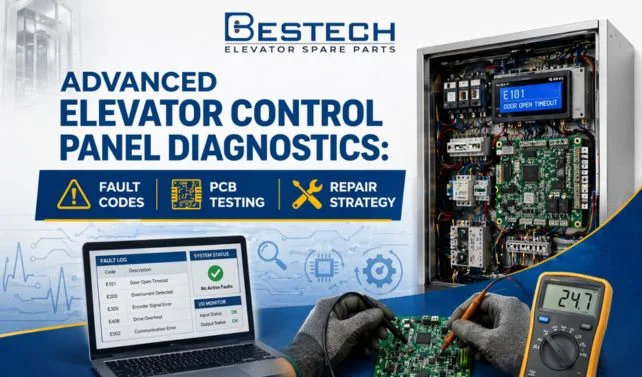
This guide explains practical elevator panel diagnostics, including simple testing steps, fault code understanding and repair strategy for reliable lift operation.
Control Panel Components Overview
The control panel acts as the brain of the lift system. Every command from floor buttons, sensors and safety switches pass through this unit before the elevator moves.
A modern control cabinet includes several electronic parts that must work together.
Main components include:
1. Controller board
This board manages system logic. It receives signals from sensors and sends commands to the drive system. A common board used in many systems is the elevator command board MCTC CCB-A which manages motion logic and communication.
2. Inverter drive
The inverter controls motor speed and direction, ensuring smooth start and stop of the lift. A reliable option used in many systems is the elevator inverter 11kW Nice L-C-4011.
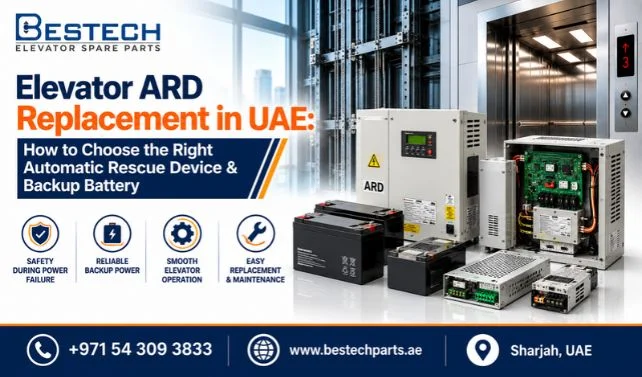
3. Automatic Rescue Device
The rescue device moves the lift to the nearest floor when power failure occurs, so passengers can exit safely. A typical solution used in many installations is the elevator ARD 11kW system.
4. Braking resistor
This part controls excess energy during braking and protects the inverter by dissipating that energy safely.
A reliable component is the elevator ARD 11kW system.These components form the main control system, and any failure in one unit can stop the entire elevator.
Understanding Elevator Control Panel Fault Codes
Lift controllers display diagnostic codes when a system problem appears. These messages help engineers locate the issue quickly.
Reading elevator control panel fault codes is the first step in troubleshooting.
Common categories of codes include:
1. Door lock fault
The lift will not move until the door locks are properly closed, ensuring passenger safety and preventing unsafe operation.
2. Motor drive error
This fault appears when the inverter detects abnormal current or overheating.
3. Communication failure
Controller boards communicate with other modules, and if this communication fails, the system displays an error.
4. Safety circuit fault
Emergency stop switches, safety relays and limit switches are part of the safety chain. Any interruption will stop elevator movement. Technicians must read the fault code and inspect the related component to reduce repair time and avoid unnecessary part replacement.
PCB Inspection Checklist
Printed circuit boards manage most lift functions, and accurate troubleshooting starts with a structured inspection routine.
Technicians should also follow ESD protection practices to avoid damage to sensitive electronic components.
A clear step-by-step process:
- Disconnect main power before opening the control cabinet
- Inspect the board surface for burn marks or discoloration
- Check connectors for loose contact
- Look for swollen capacitors
- Examine solder joints for cracks
- Examine solder joints for cracksVerify that no moisture or dust is present
When working on boards like the elevator command board MCTC CCB-A, visual inspection is the first stage before electrical testing. A structured lift controller repair guide helps engineers avoid mistakes during this process.
Identifying Burnt Components
Burnt components are one of the most visible problems in elevator electronics. Signs include dark marks on the board, a burning smell and damaged resistors or capacitors.
Common reasons are:
- Power surge
- Motor overload
- Cooling failure
- Poor wiring connection
Engineers must also check the reason for failure when a burnt part appears. Replacing the damaged component without fixing the root cause may lead to repeat faults.
Testing SMPS Relays and Contactors
Electrical testing is required when visual inspection does not reveal the issue. Technicians use multimeters, insulation testers and power supply testers during elevator PCB troubleshooting.
Important components to test are as follows:
1. SMPS power supply
This unit provides low voltage power for the controller board. If voltage is unstable, the entire control panel may stop.
2. Relays
Relays switch control signals, and a faulty relay contacts may cause signal failure.
3. Contactors
These heavy duty switches manage motor power, and worn contacts can stop elevator movement. During elevator panel diagnostics, engineers measure voltage levels and coil resistance to confirm proper function.
Testing should follow safety rules and standard maintenance practice.
Repair vs Replacement Cost Comparison
| Factor | Repair | Replacement |
|---|---|---|
| Cost | Lower initial cost | Higher upfront cost |
| Time Required | Faster if minor fault | May take longer depending on part |
| Reliability | May have risk of repeat faults | More reliable with new |
| Suitable For | Minor issues like capacitors or | Major damage or critical |
| Equipment Age | Less suitable for older systems | Better for outdated or worn |
| Safety Compliance | May not meet full standards if | Ensures compliance with EN81 |
| Downtime Impact | Short if repair is simple | Faster recovery in major failures |
Practical Examples
- If the inverter drive fails, replacing it with a reliable unit like the 11kW Nice L-C-4011 elevator inverter ensures stable operation.
- If braking circuits show overheating, the elevator braking resistor 3500W should be replaced to prevent further system damage.
- Using genuine parts from a trusted elevator spare parts supplier ensures compatibility, safety, and long service life.
Final Insight: Repair is suitable for small faults, but replacement is the safer and more reliable choice for critical components that affect lift performance and passenger safety.
Safety Compliance and Standards
Elevator systems must follow strict safety rules to protect passengers and maintenance teams.
Two key international standards include:
1. EN81
European safety standard for elevator design, installation and operation.
2. IEC electrical standards
These standards guide electrical safety testing, insulation requirements and equipment protection.
Engineers must confirm that repairs maintain compliance with these standards during elevator panel diagnostics. Improper repair or low quality parts may create safety risk and legal liability.
Conclusion
Reliable elevator performance depends on accurate diagnostics and proper component testing. A clear troubleshooting process helps engineers detect problems quickly and maintain safe operation.
Understanding elevator control panel fault codes allows technicians to identify issues before major system failure occurs. Careful troubleshooting, combined with structured inspection, helps locate damaged components and prevent repeated faults.
Using trusted parts, such as drives, braking resistors, and rescue systems, supports long-term system stability.
Working with an experienced elevator spare parts supplier ensures genuine components and reliable technical support for modern elevator systems.
FAQ
1. What are elevator control panel fault codes?
Elevator control panel fault codes are messages from the controller that indicate system errors like door faults, drive issues or safety circuit problems.
2. How is elevator PCB troubleshooting performed?
Technicians inspect the circuit board, check connectors, test voltage supply and measure electronic components to find faults.
3. When should a lift controller board be replaced?
Replacement is required when the board has major burn damage, repeated failure or outdated components that cannot be repaired safely.
4. What is the function of an elevator ARD system?
An ARD moves the elevator to the nearest floor during power failure so passengers can exit safely.
5. Why is using genuine elevator spare parts important?
Original components ensure compatibility, safety compliance and long term reliability in elevator control systems.