Every time a lift moves, it depends on many hidden systems working together to keep people safe. Most users step in, press a button and expect a smooth ride without thinking about what happens behind the panels. In reality a lift is supported by a network of safety parts that control movement speed, doors and emergency response.
In modern buildings elevator safety components are not optional features. They are a basic requirement for safe operation. These systems are designed to find problems early, stop unsafe movement and protect passengers at all times. In this blog you will understand how each component works and why proper care is crucial for long-term safety.
What Are Elevator Safety Components
Elevator safety components are the parts that control and protect the lift during operation. They make sure the lift runs smoothly and stops safely when needed.
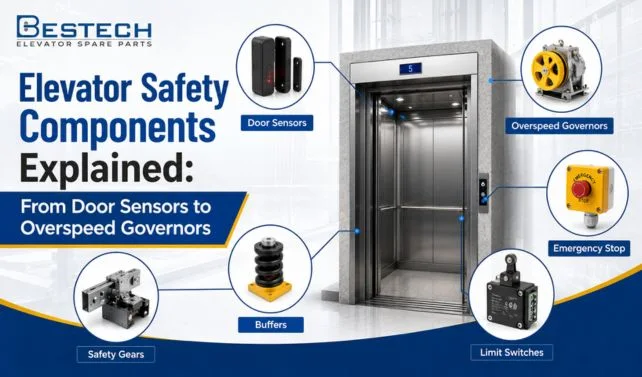
A standard elevator safety devices list includes door sensors, overspeed governors, emergency systems control units and braking systems. Each part has a specific function. Some monitor movement while others react to faults. Together they form a complete safety system.
Without these components a lift cannot operate safely. They are tested and installed based on strict safety rules to ensure reliable performance in all conditions.
Why Elevator Safety Systems Are Important
Elevators are used in homes, offices, hospitals and malls every day. Any component breakdown may put passengers in danger and harm the system.
Safety systems help to prevent accidents by controlling how the lift moves and responds to changes. They make sure that doors do not close on people, that speed stays within limits and that the lift stops safely when needed.
They also play a key role during unexpected situations such as power failure. Lifts would not meet safety standards and could not be used in public spaces without these systems.
Complete Elevator Safety Devices List
Understanding the main components helps you see how safety is built into every lift system. Each part has a clear role and works with others to keep the lift safe and stable during daily use.
1. Door Sensors
Door sensors detect objects or people near the door and stop it from closing. They use a light or infrared beam across the opening. If the beam is blocked, the door reopens. This helps prevent injury and protects the door system from damage.
How they work:
The system used in elevator door sensors safety is one of the visible safety features. It works by placing a light beam across the door opening. If anything blocks this beam, the door will stop and reopen.
This prevents injuries and protects passengers from getting trapped. It also reduces wear on the door system since it avoids forceful closing.
Modern sensors are designed to respond instantly. They can detect even small objects which makes them highly reliable for daily use. In busy buildings this feature is very important as doors open and close many times each day.
2. Overspeed Governors
Overspeed governors monitor the speed of the lift. The system activates the brakes if the speed crosses a safe limit which ensures the lift stops safely and avoids risk during operation.
How they prevent accidents:
Overspeed governors control how fast the lift moves. They are designed to act when the lift goes beyond the safe speed limit.
If excess speed is detected, the governor triggers the braking system immediately. This stops the lift safely and prevents serious damage or risk to passengers.
One key advantage of this system is that it works independently. Even if the main control system fails, the governor can still activate the brakes. This makes it a critical part of lift safety.
Regular testing makes sure that the governor responds correctly under different conditions.
3. Emergency Systems ARD
Emergency systems like ARD help during power failure. They move the lift to the nearest floor using backup power and open the door so passengers can exit safely.
Importance of ARD:
Power failure can happen without warning. When it does, passengers may get stuck inside the lift. This is where elevator emergency safety systems ARD becomes important.
ARD systems use backup power to move the lift to the nearest floor. The door opens so passengers can exit safely once the lift reaches that floor.
This process happens automatically and does not require manual action. It reduces panic and ensures passenger safety during unexpected situations.
4. Control Systems
Control systems manage lift movement and connect all safety components. They receive signals from sensors and ensure the lift responds correctly in all situations.
Safety Features Explained:
The control system acts as the main unit of the lift. It connects all components and makes sure they work together properly.
The elevator control system safety features monitor signals from sensors, speed systems and emergency units. The system can stop the lift or adjust its operation to prevent risk if any issue is detected.
Control boards are an important part of this system. They manage communication between components and help maintain smooth performance. A well-functioning control system ensures that all safety parts respond correctly.
5. Mechanical Safety Parts
Mechanical parts include brakes, ropes, door locks and guide rails. These support safe movement and keep the lift stable while travelling between floors.
Each of these components plays an important role in protecting passengers and giving smooth lift operation.
Elevator Safety Essentials:
Apart from major systems, there are smaller parts that support safety in daily operation. These include door locks, cables, wheels and guide rails.
It is built to handle heavy loads and repeated use even though these parts are simple. They help maintain alignment, reduce wear and give proper movement of the lift.
These are covered in detail under elevator safety essentials, where you can understand how each component supports the system.
Maintenance of Lift Safety Components
Regular maintenance is required to keep all safety systems working properly. Parts can wear out and reduce performance without proper care.
Lift safety components maintenance includes checking sensors, testing emergency systems and inspecting mechanical parts. It also involves replacing worn parts before they fail.
Basic maintenance steps include the following:
- testing door sensors for quick response
- checking overspeed governor function
- inspecting cables and brakes
- verifying control system signals
Routine service improves safety and helps avoid sudden breakdowns. It also extends the life of the lift system.
Choosing Reliable Elevator Spare Parts Suppliers in the UAE
The quality of parts used in a lift directly affects its safety. Low-quality parts may fail early and increase risk.
Working with trusted elevator spare parts suppliers UAE ensures that you get tested and reliable components. A good supplier provides quality products and supports you with the right information.
Choosing the right supplier also helps maintain system performance and reduces long-term costs.
How Elevator Safety Components Work
No single component can ensure complete safety. It is the combination of all systems that keeps the lift safe.
Door sensors protect entry points. Governors control speed. Emergency systems handle power failure. Control units connect everything and ensure proper operation.
When all these systems work together, elevator safety components create a reliable safety network that protects both passengers and equipment.
Conclusion
Elevator safety depends on proper design, quality parts and regular maintenance. Each component has a clear role in keeping the system safe and efficient.
Understanding how these parts work helps building owners and service teams make better decisions. It also ensures that lifts remain safe for daily use.
You can reduce risk and improve performance over time by using reliable components and following proper maintenance practices.
FAQ
1. What are elevator safety components?
They are systems and parts that protect passengers and ensure safe lift operation.
2. How do elevator door sensors work?
They detect objects near the door and stop it from closing to prevent injury.
3. What is the role of an overspeed governor?
It controls lift speed and activates brakes if speed exceeds safe limits.
4. What is ARD in elevators?
ARD is a system that moves the lift to the nearest floor during a power cut and opens the door.
5. Why is maintenance important for lift safety?
It helps identify issues early and keeps all safety systems working properly.