Elevator doors open and close many times every day. Because of this constant use, door-related issues are some of the most common problems faced by maintenance teams and building owners.
If you have noticed an elevator door not closing properly, understanding the possible causes can help identify the issue early and prevent more serious system failures.
Why Proper Elevator Door Operation Matters?
Elevator doors do much more than provide access to the lift car. They play an important role in safety, passenger comfort and reliable elevator performance.
When doors do not work properly, elevators may stop, show errors or become unavailable for use. In places like offices, hospitals, hotels and residential buildings, even a short disruption can affect daily activities.
Regular maintenance and timely replacement of worn components help keep elevator doors operating safely and efficiently.
Common Reasons Elevator Doors Fail to Open or Close Properly
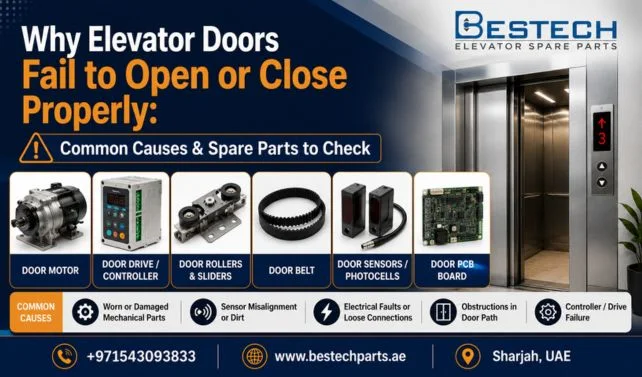
Several components work together every time elevator doors open or close. When one component begins to fail, overall door performance can be affected.
1. Worn Out Door Rollers and Door Wheels
Elevator door rollers and sliders help the doors move smoothly along their tracks. With regular use, these components can wear out, causing uneven door movement, unusual noise or alignment issues during operation.
Common reasons: Continuous high usage cycles, insufficient lubrication, dust and debris buildup in the door tracks, misaligned door panels and natural wear caused by friction over time.
2. Damaged Door Sliders
Door sliders maintain proper door alignment and allow smooth movement along the guide track. As they wear out, the doors may become misaligned or encounter greater resistance while opening and closing.
Common reasons: Prolonged usage, lack of lubrication, dust and debris accumulation in the guide track and misalignment caused by worn supporting components.
3. Faulty Door Locks
Door locks are essential safety components that prevent elevator doors from opening while the lift is in motion. If they fail, the doors may not open or close properly, and an elevator door lock replacement may be required to restore safe operation.
Common reasons: Frequent wear and tear, misaligned locking components, dust or debris buildup, electrical faults within the locking mechanism and insufficient routine maintenance.
4. Door Drive or Door Motor Failure
The door drive controls door movement, while the motor provides the power needed to open and close the doors. When these components begin to fail, door operation may become slow, inconsistent or completely stop. When these symptoms appear repeatedly, building owners may need to consider an elevator door drive replacement UAE solution.
Working with a reliable elevator door motor supplier in Dubai can help maintenance teams source suitable replacement components.
Common reasons: Wear of internal components, electrical faults, insufficient lubrication, misaligned door mechanisms and reduced motor efficiency caused by prolonged use.
5. Sensor Related Door Issues
Sensors detect passengers and obstacles in the doorway to ensure safe door operation. Many elevator door sensor problems occur when the sensors become dirty, damaged or misaligned.
Common reasons: Dirty or blocked sensor lenses, misaligned sensor beams, damaged wiring and normal sensor component wear.
6. PCB Board and Control System Problems
The control system coordinates communication between door drives, motors, sensors and door locks. When PCB boards develop faults, elevators may experience communication failures, error messages, random door faults and inconsistent operation.
Common reasons: Electrical fluctuations, ageing electronic components and moisture exposure that interrupt communication between door system components.
PCB-related faults can sometimes resemble mechanical problems because multiple elevator door components rely on the controller for proper operation.
Warning Signs That Elevator Door Components Need Replacement
Not every problem requires immediate replacement. However, certain warning signs should not be ignored, as they may indicate that key door components have reached the end of their service life.
Watch for:
- Unusual noises during door operation, such as grinding, squeaking or rattling sounds.
- Doors opening or closing more slowly than normal, indicating reduced motor or drive performance.
- Doors reversing unexpectedly without detecting an obstacle, which may point to sensor or controller issues.
- An elevator door not closing properly due to worn rollers, sliders, locks or alignment problems.
- Frequent service calls for the same issue, suggesting that repairs are no longer providing a lasting solution.
- Repeated error messages or fault codes that continue even after maintenance has been performed.
- Increasing maintenance costs caused by repeated repairs and replacement of individual parts.
Replacement may offer better long term reliability when these symptoms continue despite repairs.
Spare Parts to Check First During Elevator Door Troubleshooting
When diagnosing elevator door problems, maintenance teams typically inspect several critical components first to identify the source of the fault.
| Problem Observed | Possible Component to Check | What to Look For |
|---|---|---|
| Door does not close completely | Door Lock, Sensor, Door Drive | Lock faults, sensor obstruction or door drive issues |
| Door reopens after closing | Sensor | Dirt, misalignment or false object detection |
| Door opens slowly | Door Motor, Door Drive | Reduced motor performance or door drive faults |
| Door movement is noisy | Door Wheels, Rollers, Sliders | Wear, cracks or insufficient lubrication |
| Door moves unevenly | Door Sliders, Door Wheels | Misalignment or excessive component wear |
| Random door faults and error messages | PCB Board | Communication failures or controller faults |
Further insights into elevator door spare parts can help maintenance teams identify which components should be inspected, maintained and replaced as part of a preventive maintenance programme.
How Preventive Maintenance Reduces Door Failures?
Many elevator door problems can be identified before they lead to operational interruptions. A well-planned preventive maintenance programme helps improve reliability, reduce downtime and extend the service life of door components.
- Regular inspections help identify worn components early, reducing the risk of unexpected elevator door failures.
- Cleaning door tracks removes dust and debris that can interfere with smooth door movement and proper alignment.
- Checking sensors ensures correct alignment and accurate obstacle detection, helping prevent unnecessary door reopening or closing issues.
- Testing door locks confirms they operate safely and securely, reducing the likelihood of door malfunctions.
- Monitoring door motor performance helps detect early signs of wear or reduced efficiency, allowing maintenance teams to address issues before component failure occurs.
Choosing Quality Elevator Door Spare Parts in the UAE
Selecting the right replacement parts is just as important as identifying the fault itself. Using quality components helps improve elevator reliability, minimise downtime and support long-term performance.
1. Compatibility With Elevator Brands
Replacement parts should match the elevator manufacturer's specifications to ensure proper fit, safe operation and dependable performance.
2. Genuine vs Aftermarket Parts
Both genuine and high-quality aftermarket parts can be suitable, provided they meet the required quality standards and are fully compatible with the specific elevator system.
3. Availability of Components
Having quick access to replacement components helps minimise downtime by allowing maintenance teams to replace faulty parts promptly and restore normal elevator operation.
4. Working With Reliable Suppliers
Partnering with experienced elevator spare parts suppliers in UAE helps maintenance teams source dependable components and technical support whenever required.
For more information, you can also explore this guide on elevator door selection, which provides useful insights when evaluating replacement door systems.
Key Takeaways
Elevator door problems often begin with early warning signs such as slow door movement, unusual noises, repeated faults or inconsistent operation. Identifying these issues early and replacing worn components with quality spare parts helps reduce downtime, improve safety and maintain reliable elevator performance.
FAQ
1. Why do elevator doors reopen after starting to close?
This is commonly caused by sensor issues, alignment problems or false obstruction detection.
2. What causes elevator doors to move slowly?
Worn door motors, door drives, rollers or sliders can reduce the speed and smoothness of elevator door operation.
3. How often should elevator door components be inspected?
Elevator door systems should be inspected regularly as part of a preventive maintenance programme throughout the year to identify wear and potential faults early.
4. Can PCB board faults affect elevator door operation?
Yes. PCB boards control communication between multiple door components, and a faulty PCB can cause door errors, inconsistent movement and operational interruptions.
5. Which spare parts should you check first when elevator doors stop working properly?
Door locks, rollers, sliders, sensors, door drives, door motors and PCB boards are usually among the first components inspected during troubleshooting.