Modern elevators are one of the most heavily used systems in residential towers, commercial buildings, hospitals, hotels, and industrial facilities. A single unexpected elevator failure can cause inconvenience, safety concerns, operational disruptions, and costly emergency repairs.
This is why preventive maintenance plays a critical role in ensuring elevator reliability and passenger safety.
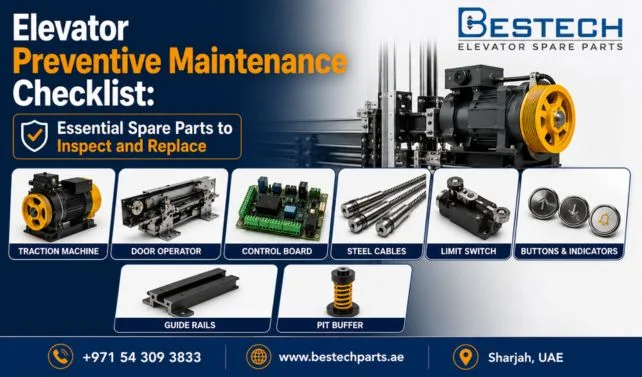
In this guide, we will explore the most important electrical, mechanical, and safety components that require routine inspection and replacement.
What Is Preventive Elevator Maintenance?
Preventive elevator maintenance involves regularly inspecting, testing, servicing, and replacing critical components in accordance with manufacturer recommendations, applicable safety standards, and scheduled maintenance programs. This proactive approach helps identify wear before it develops into costly failures.
- Minimize unexpected breakdowns
- Improve passenger safety
- Extend equipment lifespan
- Reduce emergency repair costs
- Ensure regulatory compliance
- Improve elevator performance and ride quality
Regular maintenance also helps technicians detect hidden issues that may not be visible during daily operation.
Following a comprehensive elevator maintenance checklist ensures that both electrical and mechanical systems remain in optimal condition throughout the year.
Electrical Components to Inspect Regularly
Electrical systems act as the brain and nervous system of an elevator. Even a minor electrical fault can lead to service interruptions, safety risks, or complete shutdowns.
1. Contactors
Contactors control the power supplied to motors and other elevator systems. Over time, contacts can wear out due to repeated switching operations. Regular inspection helps identify pitting, overheating, or damaged contacts.
During inspections, technicians should check for burnt contacts, excessive wear, overheating signs, and loose connections.
2. Circuit Breakers
Circuit breakers protect the elevator from electrical overloads and short circuits. Routine inspections should verify proper tripping functionality, no visible damage, secure wiring connections, and correct load ratings.
3. Inverters
Inverters regulate motor speed and ensure smooth elevator acceleration and deceleration.
Maintenance checks include monitoring fault codes, inspecting cooling fans, verifying voltage output, and checking internal components for overheating.
4. PCB Boards
Printed Circuit Boards (PCBs) manage communication between elevator subsystems.Technicians should inspect for burn marks, corrosion, loose connectors, and component degradation.
5. Encoders
Encoders continuously monitor and communicate the elevator car's exact position, speed, and direction to the control system, ensuring accurate floor leveling and smooth operation. Even minor encoder faults can result in leveling inaccuracies, unexpected fault codes, jerky movement, or service interruptions. During preventive maintenance, technicians should verify signal accuracy, inspect mounting and wiring, and check for signs of physical damage or wear to ensure reliable elevator performance.
6. Cables and Wires
Electrical wiring is frequently overlooked but remains essential for safe operation. Inspection should include insulation condition, wire continuity, loose terminals, and signs of moisture damage.
If your elevator suddenly stops operating, you may also find our guide on elevator not working helpful for identifying critical electrical components that require immediate attention.
Mechanical Components That Require Routine Checks
Mechanical components experience continuous wear due to constant movement and passenger usage.
Regular inspection helps prevent costly mechanical failures.
Door Locks
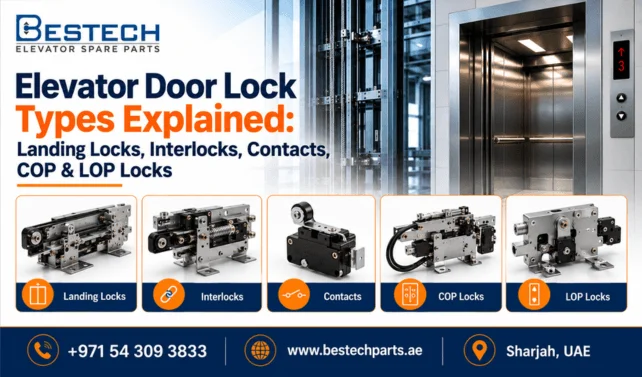
Door locks are one of the most critical safety components in an elevator, preventing the doors from opening unless the elevator car is correctly positioned at a landing. A worn, misaligned, or faulty door lock can cause repeated service interruptions, prevent the elevator from operating, or create serious safety risks.
During preventive maintenance, technicians inspect the locking mechanism, electrical contacts, alignment, and wear to ensure the doors lock and unlock reliably during every operating cycle.
Door Wheels
Door wheels enable smooth door movement. Noisy operation, jerky movement, and slow opening or closing speeds are often signs that these parts require attention. Replacing worn door wheels and sliders improves performance and also helps reduce strain on door motors.
Door Sliders
Door sliders maintain door alignment during operation. Routine checks help identify friction damage, excessive wear, and misalignment.
Replacing worn sliders improves door performance and reliability.
Guide Shoes
Guide shoes keep the elevator car properly aligned along guide rails.Inspection should focus on wear levels, lubrication condition, and alignment issues. Neglected guide shoes can increase vibration and reduce ride comfort.
Door Drives and Motors
Door operators perform thousands of opening and closing cycles every month. Maintenance teams should verify motor performance, belt condition, drive mechanisms, and opening and closing speed.
Routine inspection of these elevator electrical and mechanical parts helps maintain smooth passenger flow and prevents service interruptions.
Control & Safety Systems Maintenance
Modern elevators rely heavily on advanced control and safety systems.
These systems require routine testing to ensure reliable operation during normal and emergency situations.
Buttons
Call buttons and car station buttons represent the primary user interface. Mechanical buttons suffer from contact wear and dirt accumulation, while membrane switches can develop intermittent operation from repeated pressing. LED indicators behind buttons may dim or fail, confusing passengers about whether their call registered. Replacement of worn buttons improves user experience and prevents frustration-related damage from excessive force.
Sensors
Modern elevators incorporate numerous sensors, including load weighing devices, door obstruction detectors, and position sensors. Dirty or misaligned sensors cause nuisance door reversals or dangerous closing forces. Cleaning, alignment verification, and sensitivity testing should occur during every maintenance visit.
Signalization Systems
Floor indicators, direction arrows, and audible announcements guide passengers and comply with accessibility requirements. LED displays may develop failed segments. Audible systems require volume verification and clarity testing for accessibility standards.
ARD Systems
Automatic Rescue Devices (ARD) provide emergency operation during power failures, moving the car to the nearest floor and opening doors to release passengers. Battery capacity testing, charging circuit verification, and full-function testing during planned maintenance ensure ARD systems function when truly needed.
Switches
Limit switches, position switches, and safety switches throughout the elevator system provide critical feedback and interlocking functions. These mechanical devices contain springs, contacts, and actuators that wear with use. Inspection should verify proper actuation points, contact resistance, and housing integrity.
Warning Signs That Parts Need Replacement
Even with regular maintenance, elevator components eventually reach the end of their service life.
Recognizing warning signs early helps prevent major failures.
1. Unusual Noises
Grinding, squealing, or clunking sounds indicate mechanical distress. Door operators may emit squealing from worn bearings or belts. Guide shoes can produce grinding if liners are worn through to metal. Motor bearings generate distinctive high-pitched whines as they deteriorate. Any new or changed noise needs immediate investigation.
2. Door Operation Issues
Doors that hesitate, reverse repeatedly, or fail to fully open or close signal problems with door drives, locks, rollers, or sensors. Slow door operation often precedes complete failure and increases passenger frustration.
3. Levelling Problems
Levelling errors indicate encoder issues, brake wear, or control system problems requiring attention. Consistent levelling errors at specific floors may indicate guide rail irregularities rather than component failures.
4. Frequent Faults
Repeated system errors often indicate deteriorating components that require replacement. Reviewing fault history during maintenance visits helps identify patterns pointing to specific components nearing failure.
5. Increased Downtime
When service calls become more frequent, it may be time to replace aging parts rather than continue repairing them.
Building owners planning upgrades should also review an elevator modernization spare parts checklist to identify outdated components that can be modernized for improved performance and efficiency.
Recommended Elevator Maintenance Schedule
A structured maintenance schedule ensures no critical component is overlooked.
1. Monthly Checks
Monthly inspections should include door operation testing, button functionality, safety sensor checks, visual inspections, and basic cleaning.
2. Quarterly Inspections
Every three months, technicians should perform electrical testing, contactor inspection, circuit breaker verification, door mechanism adjustments, and lubrication checks.
3. Annual Preventive Maintenance
Comprehensive yearly maintenance should include full safety audits, encoder testing, ARD system verification, PCB inspection, and major component replacement assessments.
A comprehensive preventive maintenance program combines monthly, quarterly, and annual inspections while following the elevator manufacturer's maintenance guidelines. This structured approach helps maintain reliable performance, improve passenger safety, and extend the service life of critical components.
How Quality Spare Parts Improve Elevator Reliability
The quality of replacement parts directly affects elevator performance and longevity.Using genuine, high-quality components offers several advantages.
Reduced Downtime
High-quality, properly specified spare parts can significantly reduce the risk of unexpected failures and service interruptions when installed and maintained correctly.
Enhanced Safety/strong>
Certified components ensure compliance with safety standards and manufacturer specifications.
Lower Long-Term Maintenance Costs
Although premium parts may have a higher initial cost, they typically last longer and require fewer repairs.
Better Performance
High-quality components improve ride comfort, door operation, system responsiveness, and energy efficiency.
Partnering with trusted elevator spare parts suppliers in the UAE ensures access to reliable products that support long-term elevator performance.
Preventive maintenance is one of the most effective ways to improve elevator safety, reliability, and operational efficiency while reducing the likelihood of unexpected breakdowns.
FAQ
1. What is preventive elevator maintenance?
Preventive elevator maintenance involves scheduled inspections, servicing, testing, and replacement of components before failures occur to improve safety and reliability.
2. How often should elevators be inspected?
Most elevators require monthly checks, quarterly inspections, and a comprehensive annual preventive maintenance assessment.
3. What are the signs that elevator parts need replacement?
Common signs include unusual noises, door malfunctions, leveling issues, frequent fault codes, and increased downtime.
4. How do quality spare parts improve elevator performance?
High-quality spare parts reduce downtime, improve safety, enhance system performance, and lower long-term maintenance costs.